

There are few better arguments for living in Colorado than sitting in hot water on a cold night, watching snow come down through the pines.
Getting there takes more planning than most people expect. A hot tub is heavy, it is wet, it needs power, and where you put it decides whether you use it twice a year or three times a week.
Here is how to plan a deck that makes it easy.
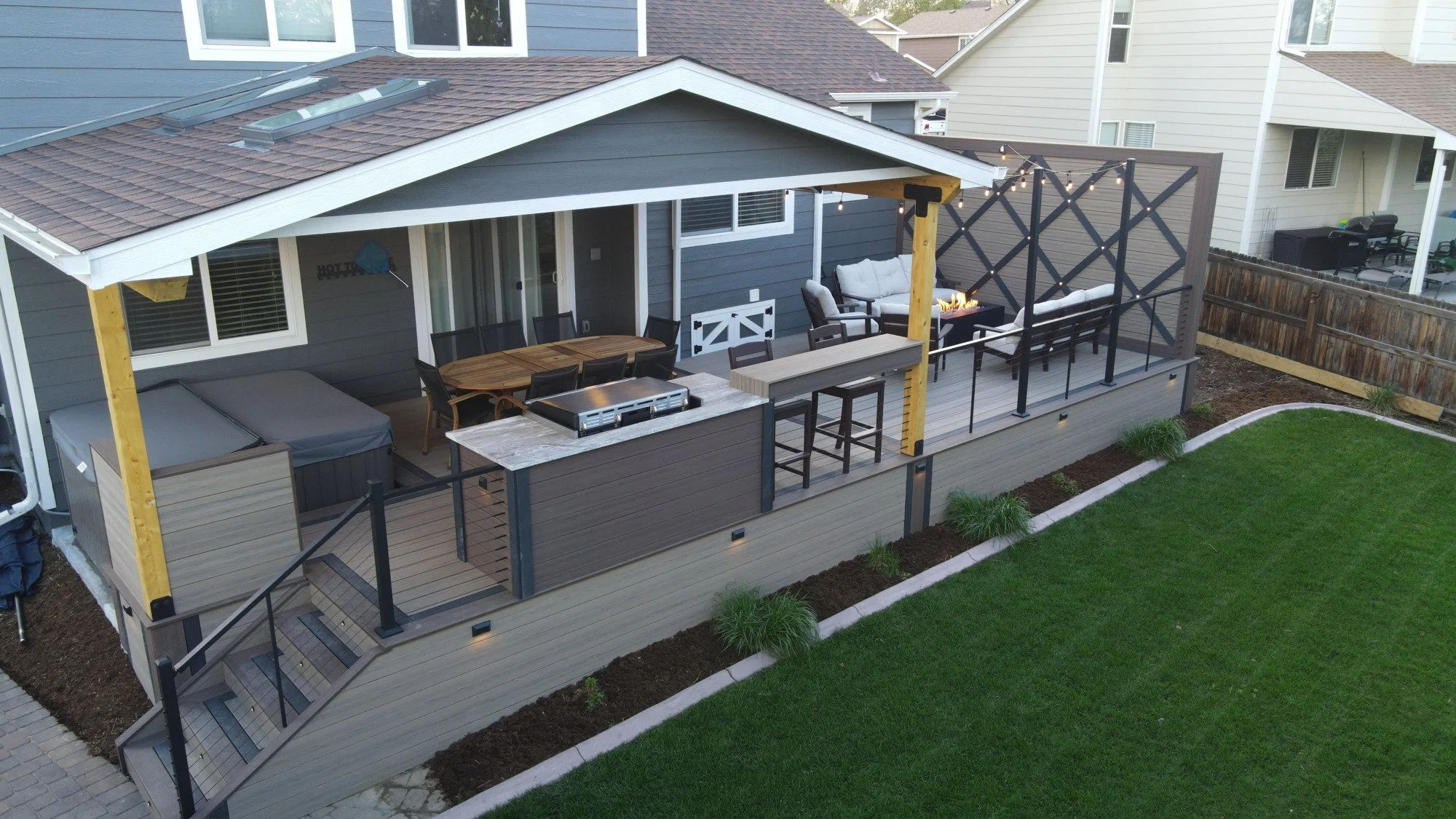
Where should the hot tub actually go?
Start with the walk, not the view.
The single biggest predictor of how often a hot tub gets used is how far you have to travel in a robe in February. A tub that is twenty steps from the door in the cold gets used far less than one just outside it, no matter how good the view is from the far corner of the yard.
Balance these:
- Distance from the door. Shorter is better, especially the path back inside.
- The view. If you can face the foothills or the trees, do it.
- Privacy. From neighbors, and from your own windows.
- Wind. Exposed corners are miserable in shoulder season.
- Snow. Where does it slide off the roof, and where will it be shoveled?
- Service access. Panels have to come off eventually.
On a larger lot, the tub often becomes its own destination within a multi-zone outdoor space, tucked away from the dining and fire areas so it feels like a retreat.
Can your deck actually hold it?
This is where the planning gets serious.
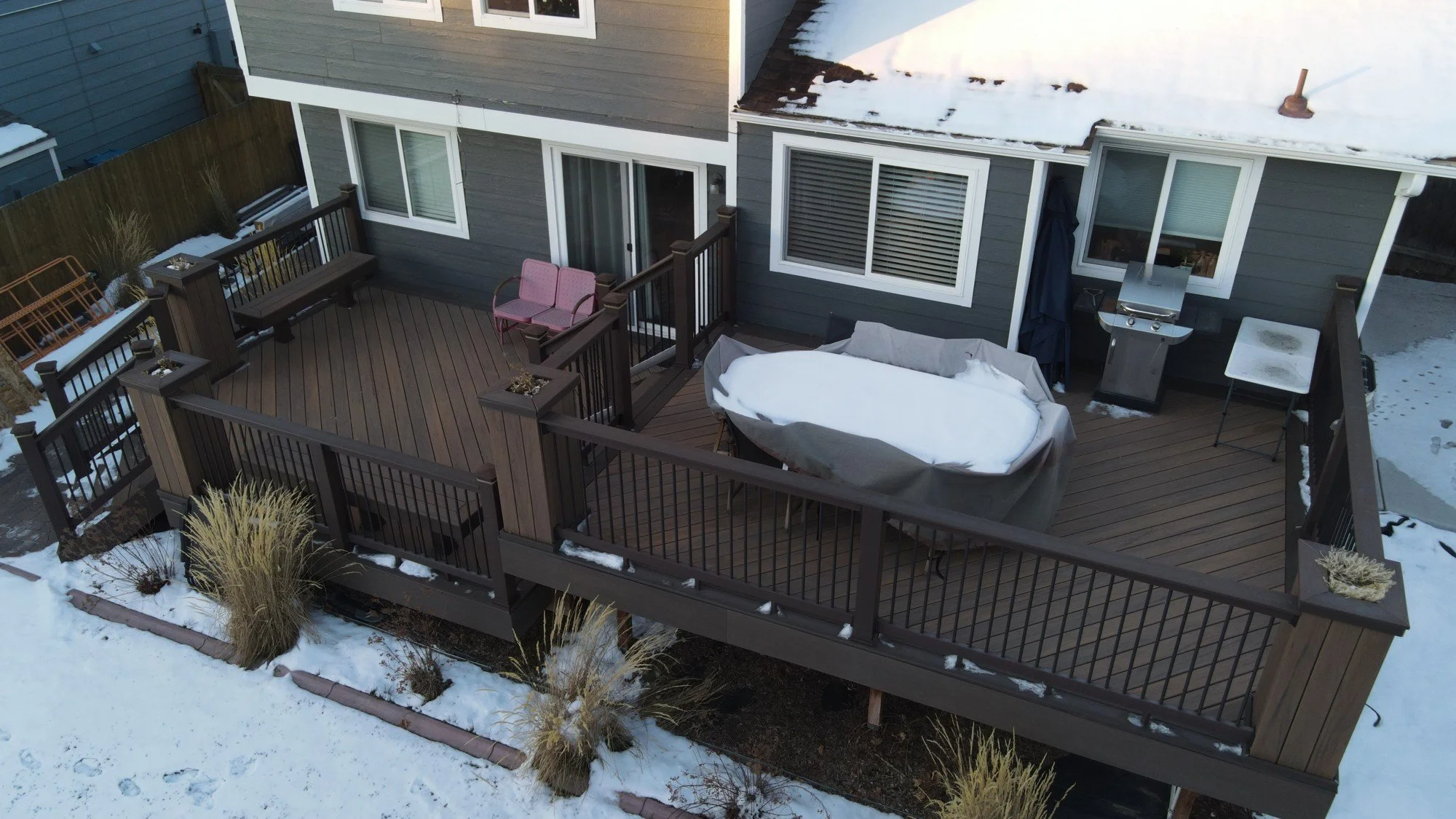
A filled hot tub with people in it can weigh several thousand pounds, concentrated in a small footprint. That is not a load a standard deck frame is designed to carry. It changes the footings, the beams, the joist spacing, and often the posts.
The honest rule: a hot tub has to be designed into the structure, not set on top of a deck that was built for patio furniture. Retrofitting is sometimes possible, but it requires a real structural look first.
We cover the structural side in detail in deck foundation best practices for hot tubs and heavy loads in Colorado.
Ground level or elevated both work. Recessing a tub so the rim sits closer to deck height looks beautiful and adds framing complexity, so decide early.
How do you build in privacy?
Privacy is what turns a hot tub into a retreat rather than a fishbowl.
Options that work well here:
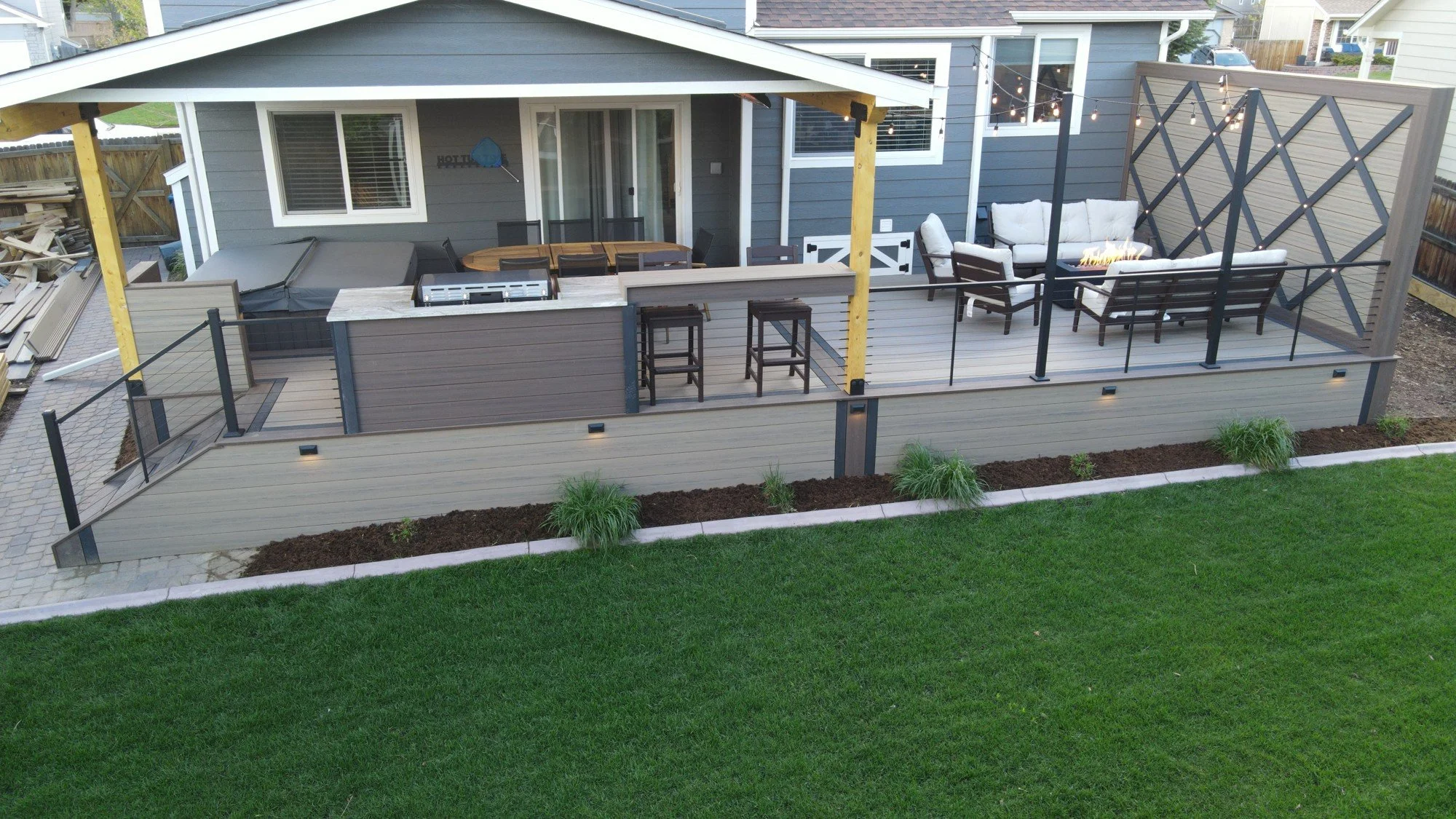
- Horizontal slat screens. Modern, clean, and effective without closing everything in.
- A partial pergola or roof. Overhead structure creates enclosure and keeps snow off the cover.
- Planting. Slower, but evergreens do real work year round in Colorado.
- Placement and grade. Sometimes the answer is simply choosing a lower or tucked corner.
Aim to block sight lines from the neighbor's second story and from your own main windows. You want to feel unobserved without feeling boxed in.
What about traction and snow?
This is the detail people appreciate most in January.
The deck around a hot tub is wet, often icy, and walked on barefoot. Surface traction matters more here than anywhere else on your property. It is one of the reasons we frequently install Deckorators Voyage, which has excellent slip resistance and stays more comfortable underfoot. We compared the options in our Deckorators and Trex comparison for Colorado.
Also plan for:
- Where snow gets shoveled, so you are not piling it against the tub
- Steps with solid footing and a graspable handrail
- Lighting on the path and stairs, low and warm rather than glaring
- Drainage, so meltwater and splash-out run away from the house
What has to be planned before the build?
Utilities and access, both of which are far cheaper to handle up front.
Most tubs need a dedicated 240-volt circuit run to the location, which means coordinating with an electrician before framing, not after. You also want a hose within reach for refills, a plan for draining, and clearance to remove access panels for service. If the cover lifts, make sure there is room behind the tub for it to open.
None of this is complicated. It is only expensive when it gets discovered late.
Ready for hot water on a cold night?
We design and build decks and outdoor living spaces built around hot tubs throughout the Front Range and foothills, from Littleton and Highlands Ranch to Golden, Evergreen, and Conifer. We handle the structure, the traction, and the privacy, and we coordinate the engineering with a licensed engineer, so all you have to think about is how cold it is outside and how warm it is where you are sitting.
Dream It • Design It • Build It
Planning a hot tub for your backyard? It all starts with a quote.