
How to Choose a Deck Builder in Colorado: A Homeowner's Guide
Hiring someone to build your deck is a bigger decision than choosing the boards.
You are handing over your backyard, a real budget, and several weeks of your life. The difference between a good experience and a miserable one usually comes down to who you picked, not what you picked.
Here is what to look for along the Front Range, and the questions worth asking before you sign anything.
Why does this matter more in Colorado?
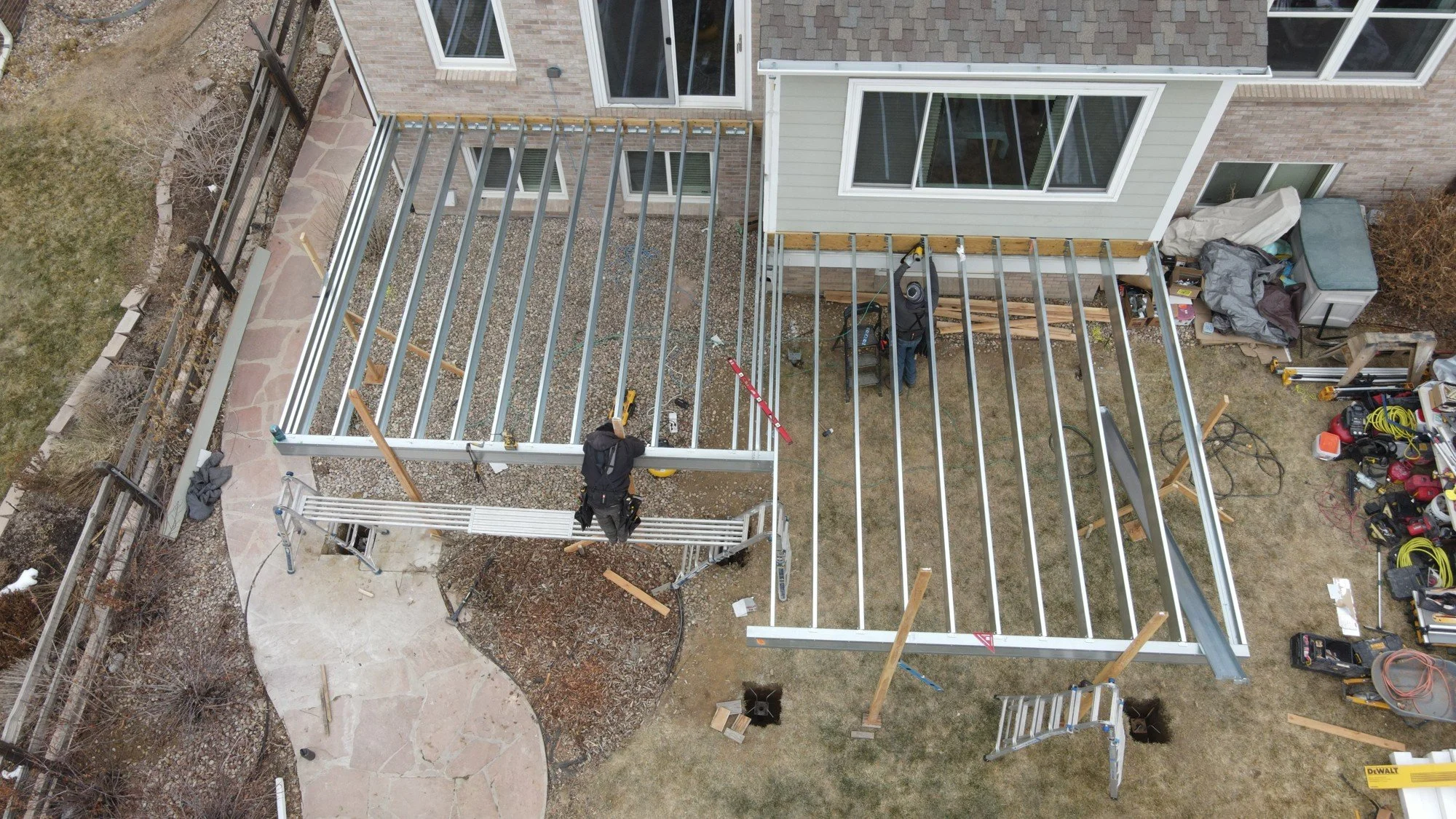
Because our conditions are unforgiving, and a lot of what protects you is invisible once the deck is finished.
Expansive soils move. Snow load is real. Wind exposure in the foothills is serious. Freeze-thaw works at every connection, all winter. A deck that was designed and permitted properly handles all of that quietly for decades. One that was not will tell you about it eventually, usually at the worst time.
You cannot see framing, footings, flashing, or fasteners from the surface. That is exactly why the builder matters.
What should you look for?
One team accountable from design through build. When the same team designs the space, coordinates the engineering, and builds it, nothing falls through the gap between a drawing and a crew's interpretation of it.
Real engineering, not guesswork. Ask whether the structure is engineered and how footings are specified for your soil. Ask who does that work, too. Some companies keep engineering in house, others work with an independent licensed structural engineer. Either approach can be done well. What matters is that a licensed engineer stamps the plans and that your builder coordinates it so you do not have to. We wrote about .
Permits handled for you. Requirements differ across Jefferson County, Douglas County, and each municipality. Your builder should know them and manage the process. Here is .
Licensing, insurance, and a written warranty. Ask for all three in writing. We carry a two-year workmanship warranty on top of manufacturer coverage.
A portfolio of finished projects nearby. Photos of work in your area tell you more than a gallery of stock images. Homes and HOA expectations vary block to block.
Communication you can live with. Ask who your point of contact is, how often you will hear from them, and what happens when something changes. This single answer predicts most of your experience.
What questions should you ask?
Bring these to any consultation:
How will the foundation be designed for my soil and slope?
Will this be engineered, and who pulls the permit?
What is your schedule, and what could realistically move it?
Who is on site day to day, and are they your crew or subcontracted?
What does your warranty cover, and for how long?
What decking do you install, and why that one for my exposure?
What is not included in this number?
The last question saves more disappointment than any other.
What should the process feel like?
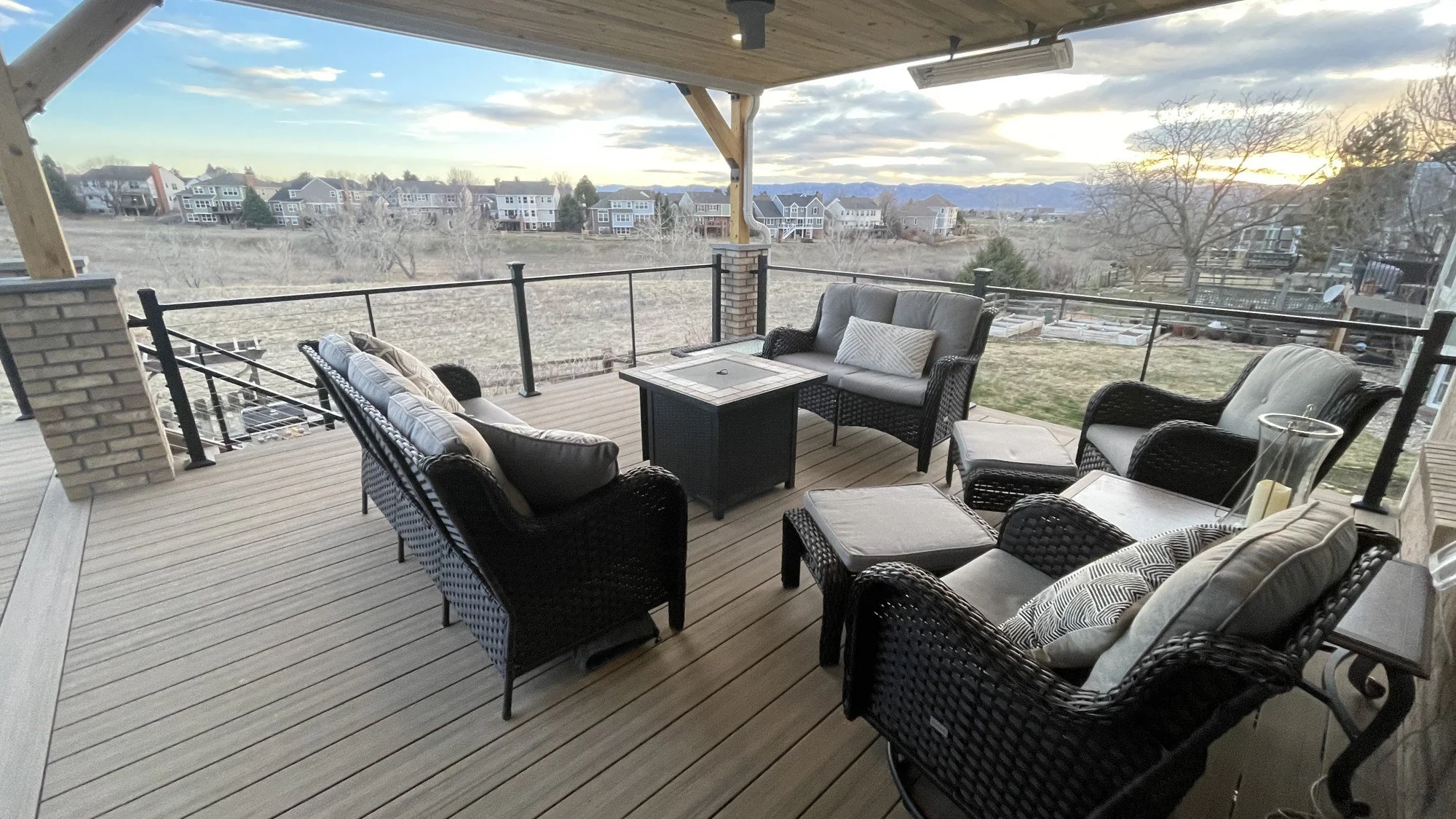
Calm, and predictable.
We work in three steps. Dream it, where we listen to how you want to live outside and design around your life rather than around lumber. Design it, where we coordinate the structural engineering with a licensed engineer and handle permits and material selection. Build it, where our crew brings it to life and finishes what they start.
You should always know what is happening next. If a builder cannot describe their process clearly at the kitchen table, that is worth noticing.
A note on price
Bids will vary, sometimes by a lot, and the cheapest number is rarely comparing the same deck.
Foundations, framing, engineering, railings, stairs, drainage, and site conditions drive far more of an investment than the surface boards. When two proposals are far apart, the gap is almost always in what is underneath or what was left out. Ask both builders to walk you through the structure line by line, and the picture usually clears up quickly.
For how the pieces add up, see and .
Where we build
We design and build custom decks, patio covers, pergolas, and outdoor living spaces across the Front Range and the foothills:
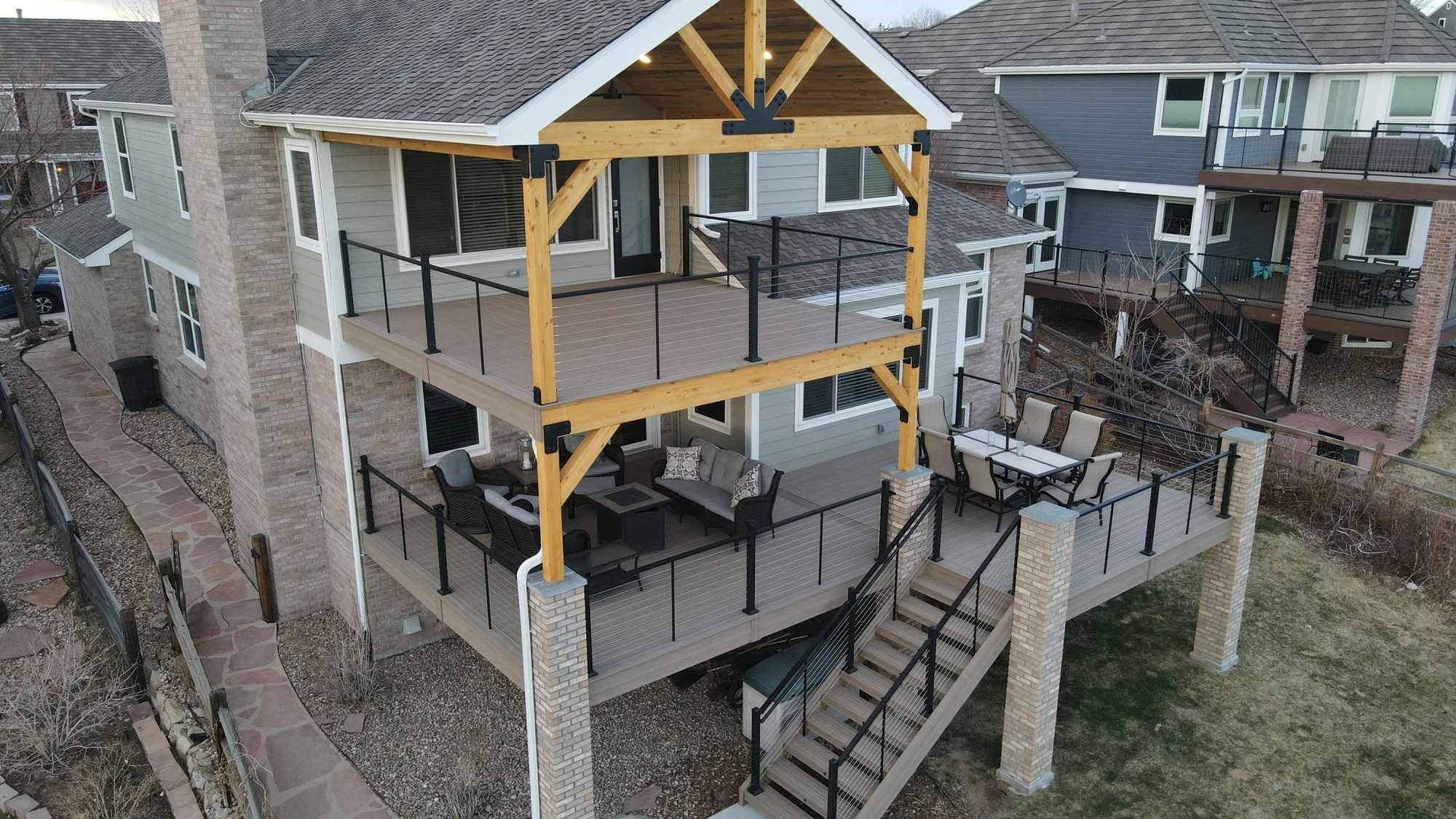
Ready to talk it through?
Bring us your questions, including the hard ones. We would rather spend an hour helping you understand the tradeoffs than sell you something you did not need.
Dream It • Design It • Build It
Thinking about your own project?